
Table of Contents
Summer as of late hasn’t exactly been what we were used to before. The once warm breeze has turned scalding hot. Each and every day is filled with heat advisories, and even the sunniest afternoon will make you feel like you’re fainting. For most of us, it’s uncomfortable. But it’s on another level entirely for families housing their aged loved ones.
Beat The Heat
Why it Hits Harder as We Age
Hot weather doesn’t feel the same at 70 as it did at 40. According to the National Institute on Aging, these are the reasons why:
- Seniors often have thinner skin.
- Seniors have reduced sweat glands.
- Seniors have a slower response to changes in temperature.
- Seniors are more likely to be on medications that disrupt the body’s cooling response.
Perhaps the most deceptive change is a blunted sense of thirst. By the time your loved one feels thirsty, they may already be slightly dehydrated.
Staying healthy during the summer also means paying attention to everyday habits like eating well. A balanced diet supports hydration and overall health, so it’s worth brushing up on some simple nutrition tips for seniors.
Keep Your Home Cool
The home should be a refuge from the heat. It shouldn’t make you feel like you’re in a furnace. With today’s climate, you most likely need to be more proactive in managing your home’s temperature.
Thermostat and AC
Keep the thermostat set between 74-78°F (23-26°C) during the day and slightly cooler at night. If running the AC continuously feels costly, prioritize the rooms most frequently used by everyone in your house–that being the bedrooms and the main living area for most people. A small window unit in a single room is far better than no cooling at all.
Keeping indoor temperatures comfortable is just one part of creating a safer living environment. Small home modifications can go a long way towards making your home safer for older adults all year long.
Fans
A fan’s main purpose is to move the air. They aren’t capable of cooling it.
The air moves around your body instead, which helps sweat evaporate faster. That’s what creates the cooling effect.
However, when indoor temperatures climb above 95°F (35°C), fans alone become much less effective
For best results:
- Place fans near open windows during cooler mornings or evenings.
- Close windows and curtains during the hottest part of the day.
- Avoid pointing fans directly at someone who is already overheated without providing cooler air.
Block the Sun
Close the blinds or curtains on windows that get direct sun, especially in the afternoon. And if possible, use blackout curtains.
South- and west-facing windows tend to let in the most heat as the day goes on, so those rooms benefit most from being covered up early.
Skip the Oven and Stovetop
Avoid using the oven or stovetop on hot days–they can raise a room’s temperature by several degrees. Instead, lean on using either the microwave, slow cooker, or no-cook meals.
If you do need to cook something that requires the stove, try to do it during the coolest part of the day and run a vent fan or open a nearby window to help clear the heat.
Time Your Appliances
Run heat-generating appliances (dishwasher, dryer) in the early morning or late evening. This is when outdoor temperatures are lower and the extra heat is easier for your AC to offset.
This is especially worthwhile in smaller homes or apartments, where heat from the kitchen or laundry area can spread to the rest of the living space quickly.
Stay Hydrated
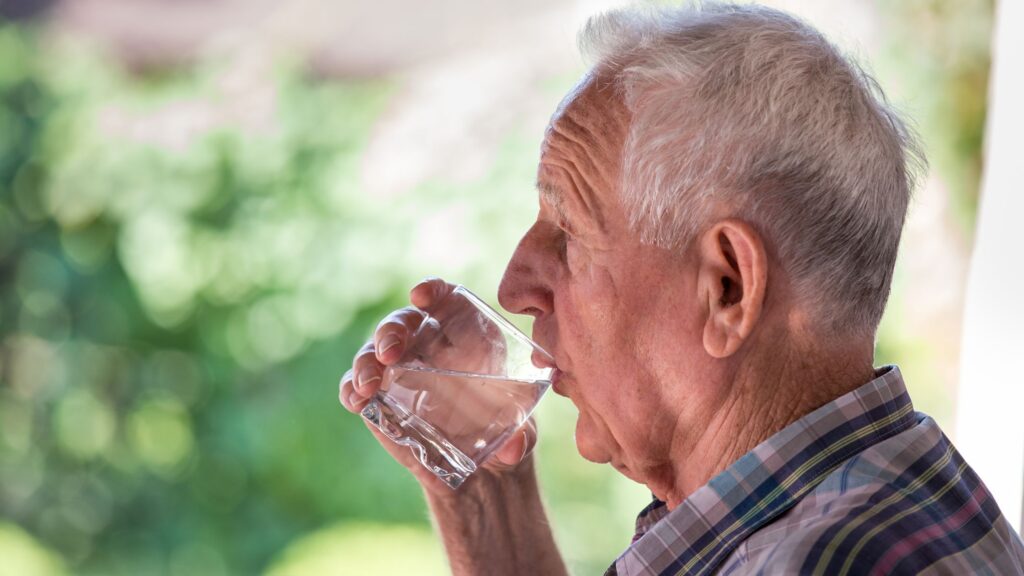
Because thirst fades with age, don’t wait for your loved one to ask for water–offer it regularly throughout the day. Small sips distributed over the day are far better than a single big glass drunk once. Keeping fluids coming in gradually helps maintain moisture in the mouth and throat instead of letting them dry between drinks.
You might want to consider the following hydration options:
- Water
- Milk
- Electrolyte drinks (when appropriate)
- Soups
- Fruits with high water content such as watermelons and oranges
Try to limit alcohol, as well as excessive coffee or caffeinated soft drinks, since these can contribute to dehydration for some people.
If a healthcare provider has recommended fluid restrictions because of heart or kidney disease, always follow their advice.
Check Your Medications
Some common medications make it harder for the body to regulate temperature or increase the risk of dehydration, including:
- Diuretics (“water pills”)
- Beta-blockers and some other blood pressure medications
- Antihistamines
- Antidepressants and antipsychotics
- Certain Parkinson’s medications
Never stop a prescribed medication without consulting a healthcare provider. Many of these medications are prescribed for ongoing medical conditions, such as chronic conditions. Instead, ask whether any extra precautions should be taken during periods of extreme heat.
Keep Safe Outdoors
If your loved one wants or needs to go outside, aim for the following:
- Plan activities before 10 a.m. or after sunset.
- Wear lightweight, loose-fitting clothing.
- Choose light-colored fabrics.
- Wear a wide-brimmed hat and sunscreen.
- Bring water everywhere.
If temperatures are unusually high, consider exercising indoors instead.
Recognize Heat Stroke Immediately
Heat exhaustion can progress to heat stroke quickly in older adults, and heat stroke is a medical emergency. Watch for:
- Confusion, slurred speech, or agitation
- Hot, dry skin (or heavy sweating that suddenly stops)
- A body temperature of 103°F (39.4°C) or higher
- Rapid pulse
- Nausea or vomiting
- Loss of consciousness
If you notice these signs, call 911 immediately. While waiting for help, move the person to a cooler space, remove excess clothing, and cool them with damp cloths or a cool (not ice-cold) bath if possible. Don’t give fluids if they’re confused or unconscious.
Stay Connected
If the heat is keeping your loved one indoors more than usual, don’t let it mean less contact. Set up a daily check-in–a phone call, video chat, or visit–so someone always knows how they’re doing. A loved one’s emotional well-being is almost always at risk if they’re left alone.
Neighbors, other family members, or a community wellness-check program can help fill in the gaps on days you can’t check in yourself. If more consistent support is needed, an in-home care agency can provide regular check-ins and an extra set of eyes.
Isolation makes it hard to catch early warning signs, so regular contact is one of the simplest and most effective safety measures you have.
Small Steps, Big Difference
None of these tips require a major renovation or a big budget. A cooler bedroom, a full water glass, a second look at a medication list, a daily phone call—small, consistent steps like these add up to real protection. As summers keep getting hotter, a little extra attention now can make all the difference for the people you love.
If you’d like an extra set of hands watching over your loved one this summer, our staff at Absolute Home Care can help. Call us at 1.877.800.9990 or visit our Customized Care page to learn more about care options in your area.