
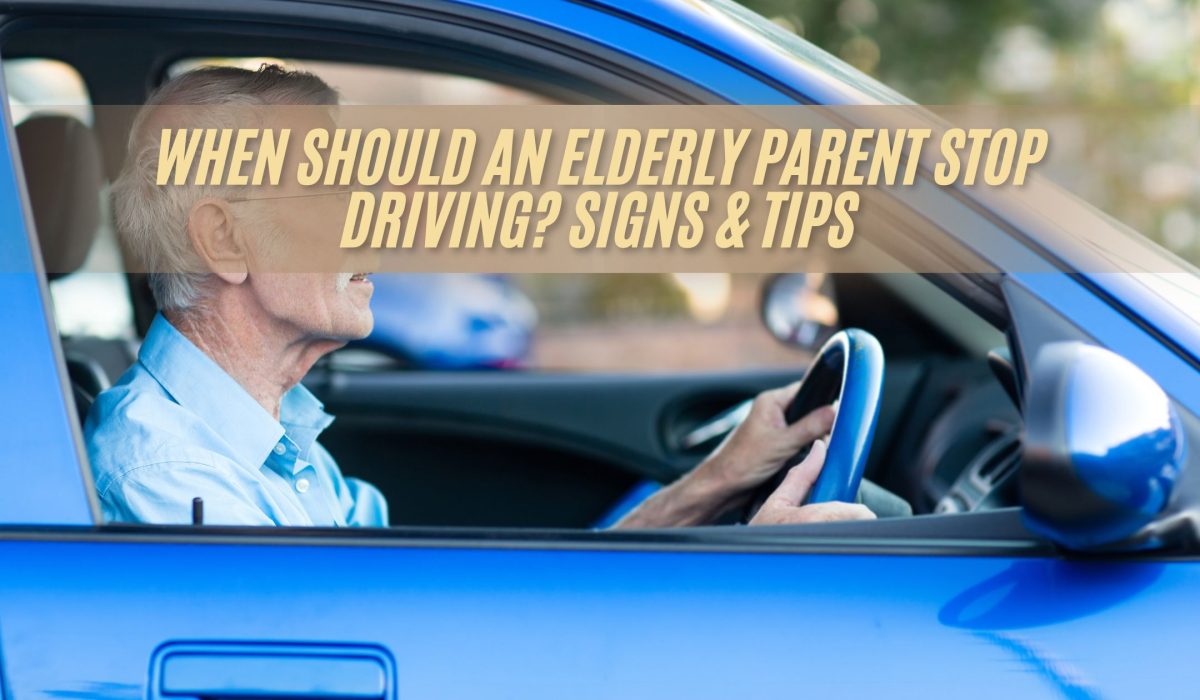
For many people, driving is about much more than getting from one place to another. A car can mean independence, privacy, spontaneity, and the ability to see friends, run errands, and get to anywhere they want without asking for help.
That’s why it’s hard for aging adults to let go of driving. You may be worried about safety, while your parent might see it as another way of taking their freedom away from them.
There is no specific age when everyone should stop driving. Instead, families should look for changes in vision, physical ability, reaction time, memory, judgement, and actual driving behavior. The National Highway Traffic Safety Administration (NHTSA) advises that driving ability should be considered individually rather than based on age alone.
When Should Seniors Stop Driving?
Older adults can remain safe drivers for many years. However, aging doesn’t really improve driving. Not when it changes the way an older adult sees, feels, and decides.
The National Institute on Aging (NIA) recommends looking at several areas when evaluating driving ability:
- Vision
- Hearing
- Mobility
- Memory
- The ability to make quick decisions
Instead of asking:
“Is my parent too old to drive?”
A better question is:
“Can my parent still drive safely and confidently?”
Age alone isn’t the deciding factor. Changes in behavior and ability are what matter most.
Signs an Elderly Parent May Need to Stop Driving
The signs that an older adult should reconsider driving are often gradual. A single mistake doesn’t necessarily mean someone must stop driving, but it’s a different story if they do it repeatedly, much like the pattern families learn to watch for among the broader signs an elderly parent may need home care.
Frequent accidents, near misses, or vehicle damage
Pay attention to patterns such as:
- Increasingly frequent minor crashes
- Unexplained dents or scratches
- Trouble judging distances
- Close calls in parking lots or intersections
Getting lost on familiar routes
A parent who becomes confused on roads they have driven for years may be experiencing changes that affect safe driving.
Warning signs:
- Missing familiar signs
- Forgetting where they are going
- Needing help with routes they previously knew well
Difficulty seeing or reacting quickly
Driving requires constant attention and fast decisions. Vision changes, slower reflexes, or reduced mobility can make certain situations more challenging.
Examples include:
- Trouble driving at night
- Difficulty reading signs
- Delayed braking
- Difficulty checking blind spots
- Struggling in heavy traffic
Changes in judgement or confidence
Sometimes the driver notices the changes first.
Your parent may:
- Avoid driving at night
- Avoid highways or unfamiliar areas
- Become unusually anxious behind the wheel
- Feel overwhelmed in busy traffic
These changes are worth discussing, especially if they affect daily life.
How to Talk to an Aging Parent About Driving
Talking about driving can be one of the hardest conversations families have with an older parent.
For many seniors, giving up driving feels like losing another reason that makes them independent. That is why approaching the conversation with empathy is important, especially when it comes to supporting a senior’s emotional well-being during a major life transition.
Use a calm approach that avoids criticism and focus on specific concerns rather than making the conversation about age.
Start with concern, not control
Avoid statements like:
“You need to stop driving.”
Instead, try:
“I’ve noticed some changes when you drive, and I’m worried about your safety. Can we talk about it?”
This creates a conversation instead of a confrontation.
Use specific examples
General statements can make people defensive. Try pointing out what you’ve specifically noticed from them.
Instead of:
“You’re becoming unsafe.”
Try:
“I noticed you had trouble seeing that intersection last week.”
Specific examples help keep the discussion focused on safety.
Understand what driving represents
Your parent may not only be worried about losing a vehicle. They may be worried about losing:
- Independence
- Social connections
- Privacy
- The ability to run errands
- Control over their schedule
Finding alternatives becomes easier when you understand what the car provides.

What If Your Parent Refuses to Stop Driving
Some older adults may become defensive or outright refuse to discuss giving up driving. This is common because driving, as mentioned earlier, is closely tied to identity and independence. It often mirrors the same standoff families face when figuring out what to do when the elderly refuse help.
Rather than turning the issue into a battle over the keys, focus on reducing risk and finding solutions.
Possible steps include:
- Scheduling a medical review
- Reviewing medications that may affect alertness or coordination
- Considering a professional driving assessment
- Limiting driving to safer situations, such as daytime or familiar routes
A professional assessment can sometimes make the conversation easier because the discussion becomes about objective abilities rather than a family disagreement.
Giving Up the Car Doesn’t Mean Giving Up Independence
If your parent eventually stops driving, the next step is creating a plan that keeps them active and connected.
Transportation options for seniors may include:
- Family or friend rides
- Public transportation
- Senior transportation programs
- Volunteer driver services
- Rideshare services
- Community resources
It’s really about answering a different question: “How do we help Mom or Dad continue doing the thing that matter?” For many families, that means arranging rides to medical appointments or lending a hand with errands. It can also mean finding new ways for a parent to stay socially connected–the same everyday support that’s at the heart of how home care helps keep seniors safe and comfortable at home.
Frequently Asked Questions
Is there a specific age when a senior should stop driving?
No. There’s no single cutoff age. NHTSA and NIA both point to individual changes in vision, reaction time, memory, and judgement as better indicators than age alone. Some people drive safely well into their nineties, while others need to stop much earlier.
What are the earliest warning signs that a parent shouldn’t be driving anymore?
Common early signs include new dents or scratches on the car, getting lost on familiar routes, trouble merging or judging distances, and avoiding driving at night or in heavy traffic. One incident isn’t usually a red flag on its own, but a repeated pattern is.
How do I bring up the topic without upsetting my parent?
Lead with concern rather than control, use specific examples instead of general statements, and pick a calm moment for the conversation. Framing it around safety, not age, tends to keep the discussion from becoming defensive.
What if my parent refuses to stop driving?
Avoid turning it into a standoff over the car keys. Instead, suggest a medical check-up, a medication review, or a professional driving assessment, and look at ways to limit driving to safer conditions in the meantime.
Can a doctor make my parent stop driving?
A doctor can’t usually revoke a license directly, but they can flag health or medication concerns, recommend an evaluation, or refer your parent to a driving rehabilitation specialist. In many states, physicians can also report unsafe drivers to the local DMV.
What are good alternatives once a parent stops driving?
Options include rides from family or friends, public transit, rideshare apps, volunteer driver programs, and local senior transportation services. Many families also look into in-home care to help fill the gap left by giving up the car.
The Goal is Safe Mobility
Knowing when an older adult should stop driving is rarely a simple decision. It requires looking at safety, health, confidence, and the individual’s ability to manage daily driving tasks.
The most productive conversations focus less on taking something away and more on finding new ways to maintain independence.
For many families, the first step is not removing the keys.
It is starting the conversation.
If your family is having this conversation right now, you don’t have to figure out the next step alone. Absolute Home Care can help you weigh transportation alternatives, plan a safer routine for your parent, or explore in-home care options that keep them independent even after they give up the keys. Call 1.877.800.9990 or visit our Customized Care page to talk through your family’s situation with our team.